

Some college students can’t fill out their financial aid forms — and California lawmakers might come to the rescue.
As CalMatters higher education reporter Mikhail Zinshteyn explains, students whose parents do not have Social Security numbers are receiving error messages when they try to fill out their Free Application for Federal Student Aid, or FAFSA. This blocks them from not only applying for federal grants and loans, but also for aid at the University of California, California State University or private California colleges.
Because the deadline to apply is April 2, Assemblymember Sabrina Cervantes drafted a bill to extend that deadline to May 2. The Corona Democrat, who is also the chairperson for the California Latino Legislative Caucus, said that moving the deadline will enable students to “access the financial resources to begin fulfilling their dreams of achieving higher education.”
Cervantes has fast-tracked the bill to go into effect immediately if it passes. The measure’s first hearing is expected Monday, but lawmakers only have a few days to approve the bill with the Legislature’s spring recess starting Thursday until April 1.
Meanwhile in the state Senate, California’s public colleges and universities urged a budget subcommittee last week to support a deadline extension for state financial aid. Gov. Gavin Newsom’s finance department and the Legislative Analyst’s Office backed the idea.
- Lisa Qing, an official with the analyst’s office: “We think that extending the state financial aid deadline is worth considering because it allows the U.S. Department of Education more time to resolve these technical difficulties.”
How many students have been affected so far?
It’s difficult to say, writes Mikhail: In California, more than 100,000 students submitted a federal aid application without their parents’ numbers in 2023, though it’s unclear whether those parents lacked a number or chose not to share one with the government.
With about $3 billion in state financial aid and thousands of eligible California students missing out on aid every year (California ranked 14th in FAFSA completion in 2023), the state has been attempting to make more financial aid available to more kinds of students.
In 2021, the state passed a law requiring all high school seniors to complete FAFSA. And last year, Newsom signed a measure requiring colleges to drop additional requirements for financial aid — particularly academic performance — that went beyond federal requirements.
But many are still left out. Adult learners lacking a high school diploma are underutilizing a little-known benefit that enables them access to federal aid, and a complex application process for undocumented students has led to only 14% of eligible DACA recipients receiving aid.
Focus on inequality: Each Friday, the California Divide team delivers a newsletter that focuses on the politics and policy of inequality. Read the latest edition here and subscribe here.
Other Stories You Should Know
Voters recall school board trustees
The “culture wars” have come to California’s classrooms as parents and the school board members they elect demand more input into the books that students read and the gender identity they bring.
In last week’s primary, voters in some school districts pushed back.
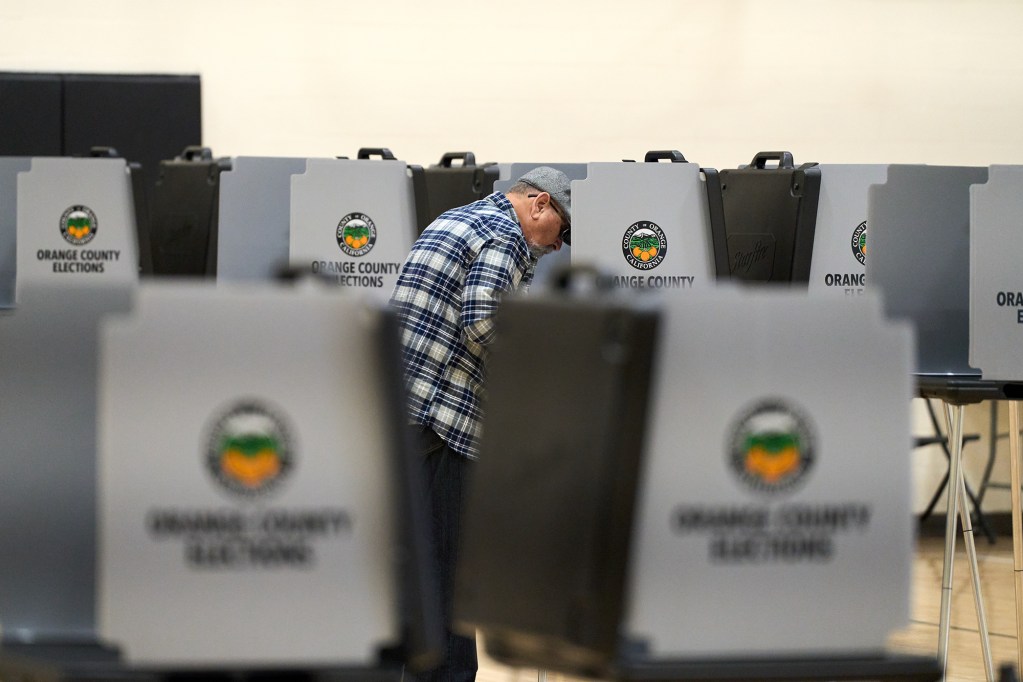
In the Southern California district of Orange Unified, district trustees Rick Ledesma and Madison Miner are in danger of being booted out, after they supported a transgender notification policy, a temporary halt of the district’s digital library over concerns of inappropriate books and banning the LGBTQ+ flag.
In 2022, Ledesma won reelection and Miner won a first term, flipping the board to a 4-3 conservative majority that quickly fired the district superintendent last year.
The recalls of both Ledesma and Miner are winning 53% of the vote as of Thursday. Miner told KCAL that the recall “is nothing more than a power grab by the same union bosses and Sacramento bureaucrats who have failed our kids for years.”
But Our Schools USA, a nonprofit education advocacy group, applauded the apparently successful recall.
- Kristi Hirst, Our Schools USA co-founder, in a statement: “Extremists putting their own personal political crusades ahead of educating our children have no place making decisions on our school boards.”
In the Yolo County city of Woodland, first-term school board trustee Emily MacDonald was recalled by 62% of voters, according to complete but unofficial returns.
Some parents launched the recall after MacDonald called “transgenderism” a “social contagion” during a board meeting.
- Tony Hoang, executive director of Equality California, in a statement today: “Anyone who seeks to single out and attack LGBTQ+ youth does not deserve to serve in public office. We are pleased to see the political careers of Ledesma, Miner, and MacDonald come to an appropriate end.”
And there’s another recall effort on the June 4 ballot for Temecula Valley Unified trustee Joseph Komrosky, who objected to a book that mentioned gay rights pioneer Harvey Milk by calling him “a pedophile.”
The district has been a focus of state officials. Gov. Newsom threatened to fine the district last summer after its school board voted to ban the book that referenced Milk (it ultimately reversed course), and Attorney General Rob Bonta filed a brief in December supporting a lawsuit against Temecula’s school board on its policies on critical race theory and transgender disclosure.
CA reps press FEMA on housing money

From CalMatters homelessness reporter Marisa Kendall:
The pressure is mounting in a $300 million fight between the state and the federal government.
Members of Congress from California are urging the Federal Emergency Management Agency to walk back a recent decision that has sparked outrage from local officials.
The issue stems from the state’s COVID-era Project Roomkey program, which moved thousands of homeless Californians into hotels in an attempt to protect them from the virus. At the time, cities and counties were under the impression that FEMA would reimburse them for the costs.
We broke the news last month that FEMA, long after the local dollars had been spent and the Roomkey hotels had closed, said in October it would not reimburse for many hotel stays longer than 20 days. In response, 36 California members of Congress sent FEMA a letter this month, asking the federal agency to reconsider.
- The letter: “Any policy to withhold FEMA reimbursements for Project Roomkey stays which lasted longer than 20 days will collectively cost California cities and counties more than $300 million at a time of incredible fiscal strain for local governments. On top of that, it could also jeopardize reimbursements that have already been received by some jurisdictions.”
The group is led by Rep. Robert Garcia of Long Beach and includes just one Republican — Rep. David Valadao of Hanford. The letter follows a similar plea the state sent FEMA in January, urging it to change its position.
When interviewed by CalMatters, FEMA Region 9 administrator Robert Fenton said local governments should have known hotel stays would be capped at 20 days, because that was the quarantine recommended by the U.S. But FEMA didn’t make that cap explicit until October — blindsiding many local officials.
Home insurers given leeway

From CalMatters economy reporter Levi Sumagaysay:
California plans to join all other U.S. states in allowing insurers to use catastrophe modeling when they set their rates, with the insurance department releasing its second regulation Thursday in its effort to address the state’s insurance crisis.
Insurers in California are currently allowed to use only historical catastrophe data when setting their homeowner premiums. Catastrophe modeling would incorporate both historical data as well as projected losses based on scientific information that take into account frequency, severity, damage and loss from wildfires, according to the draft regulation.
Insurance Commissioner Ricardo Lara told reporters Thursday that the regulation will bring more reliable rates; “greater availability” of insurance; and allow mitigation efforts to be rewarded through rates.
Insurance department staff said greater availability of insurance would mean seeing a reduction in enrollments in the FAIR Plan, which is supposed to be an insurer of last resort but which for many state homeowners has become the only option for fire insurance. This week, FAIR Plan President Victoria Roach told lawmakers that the plan wrote a record 15,000 policies in February.
- Mark Sektnan, vice president of State Government Relations for the American Property Casualty Insurance Association, in an emailed statement: “More accurate ratemaking will help restore balance to the insurance market and ensure all Californians have access to the coverage they need.”
Lara also said the new regulation will allow the insurance department to look at insurers’ catastrophe models and allow for public review. Any member of the public who’s allowed to look at the models, however, will have to sign nondisclosure agreements — a policy advocates oppose.
- Carmen Balber, executive director of Consumer Watchdog: “If an NDA prevents public interest organizations from sharing their analysis of a model with the public, public participation in a review is meaningless.”
The public has until April 23 to comment on the regulation, when there will be a hearing to discuss it before it’s finalized. The insurance department will hold a public hearing on the first regulation it released, about rate filings, on March 26.
CalMatters Commentary
CalMatters columnist Dan Walters is away.
A popular program that doubles CalFresh benefits at farmers’ markets is on the budget chopping block, but slashing the program would be devastating to food insecure Californians, writes Sarah Portnoy, a USC professor of Latinx food studies.
Other things worth your time:
How cryptocurrency executives influenced Senate primary // Los Angeles Times
Imperial County supervisor candidate says she was offered $500,000 not to run // Desert Sun
Stephen Curry hints at future in politics, maybe even president // San Francisco Chronicle
Newsom addresses Cal-OSHA staffing, but advocates underwhelmed // The Sacramento Bee
Why Biden can’t get CA gig worker law to go national // Los Angeles Times
CA farmworkers union organizes at Wonderful Nurseries // The Sacramento Bee
UC considers limiting what faculty can say on websites // EdSource
Parasite that’s deadly for dogs now confirmed in CA // Los Angeles Times
South LA man is 13th to be exonerated for murder in county since 2020 // LAist
Lawmakers and advocates push to extend Lake Tahoe restoration act // The Sacramento Bee
